
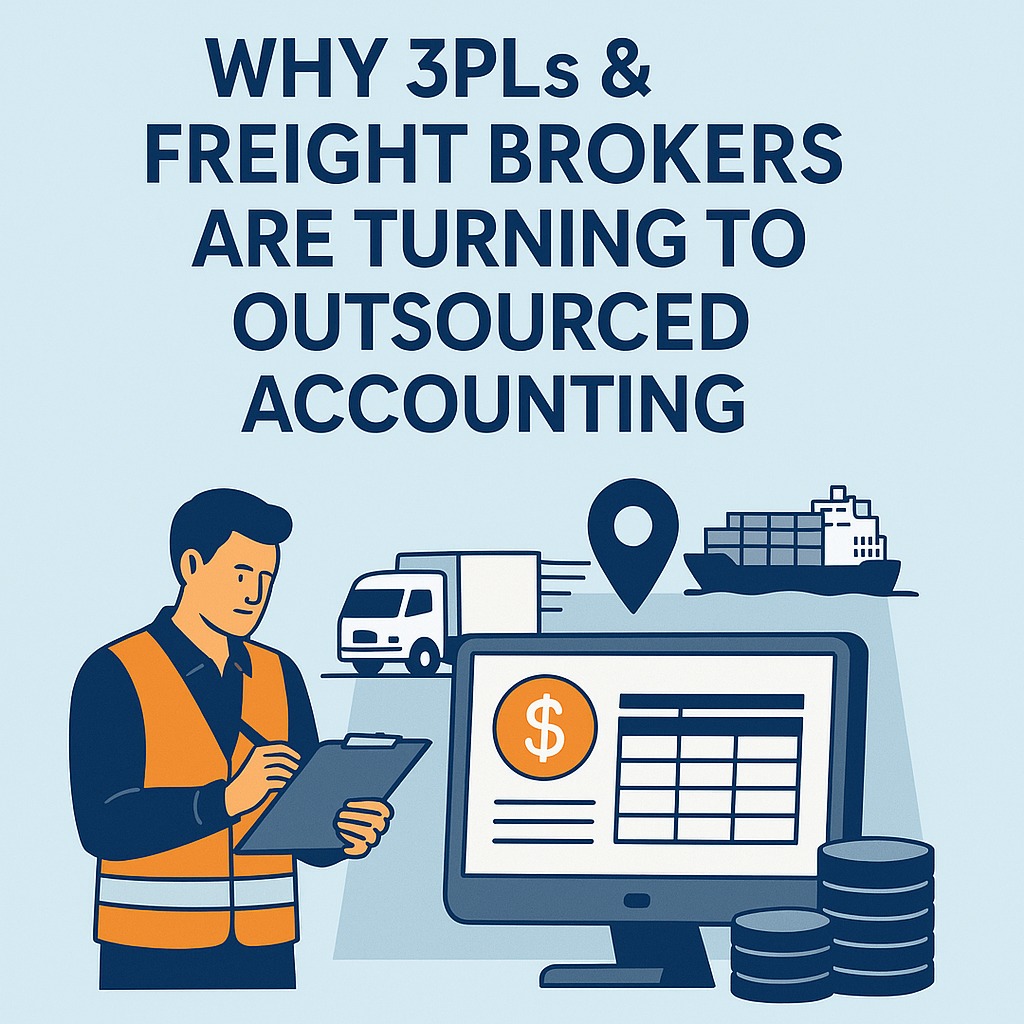
Introduction: The Financial Burden of Managing In-House Accounting
Freight brokers and 3PLs operate in a complex financial landscape, handling invoicing, carrier payments, accounts receivable, fuel costs, and compliance reporting—all while trying to maintain a steady cash flow. Managing these financial tasks in-house requires dedicated staff, specialized software, and strict oversight.
For many logistics companies, outsourcing accounting has emerged as a cost-effective and efficient solution. But why are so many 3PLs and freight brokers making the switch? Let’s explore the key benefits and considerations of outsourcing accounting in the logistics industry.
Key Reasons Logistics Companies Are Outsourcing Accounting
1. Reducing Administrative Overhead & Payroll Expenses
Hiring in-house accountants means covering salaries, benefits, training, and software costs. For small and mid-sized logistics companies, this can be a significant fixed expense.
Why Outsourcing Helps:
- Eliminates the need for full-time accounting staff.
- Converts fixed payroll expenses into a flexible, pay-as-you-go model.
- Reduces software licensing and infrastructure costs.
2. Improving Cash Flow & Faster Invoice Processing
Slow invoicing and payment collection can cause cash flow problems, making it harder to pay carriers on time. Delays in billing also increase the risk of disputes and late payments from customers.
How Outsourcing Helps:
- Professional accounting teams ensure invoices are sent immediately after delivery.
- Automated tracking of accounts receivable reduces missed payments and collection delays.
- Strong financial management helps brokers maintain positive cash flow.
3. Eliminating Costly Errors & Compliance Risks
Freight brokers and 3PLs must comply with financial regulations, tax laws, and industry standards. Mistakes in carrier payments, invoice reconciliation, or tax filings can result in penalties and strained business relationships.
How Outsourcing Helps:
- Professional accountants with logistics industry expertise ensure compliance.
- Reduces manual errors in carrier settlements, freight invoicing, and payroll taxes.
- Maintains audit-ready financial records to avoid legal and regulatory issues.
4. Access to Advanced Accounting Software Without High Costs
Investing in accounting and bookkeeping software like QuickBooks, Xero, or specialized freight billing systems can be expensive and difficult to manage. Outsourcing providers use the latest tools and integrations to streamline accounting tasks.
How Outsourcing Helps:
- Provides access to top-tier accounting platforms without added costs.
- Ensures seamless integration with TMS (Transportation Management Systems).
- Enables real-time financial reporting and analytics for better decision-making.
5. Scaling Financial Operations Without Hiring More Staff
As a 3PL or freight brokerage grows, accounting tasks become more complex. Hiring additional staff increases payroll costs and requires additional office space. Outsourcing allows logistics companies to scale financial operations effortlessly.
How Outsourcing Helps:
- Adjusts accounting services based on business volume without additional hiring.
- Helps manage seasonal fluctuations without the risk of overstaffing.
- Allows owners and managers to focus on business growth instead of financial admin work.
What Accounting Tasks Can Be Outsourced?
3PLs and freight brokers can outsource a variety of financial tasks, allowing them to focus on core business operations while ensuring smooth financial management.
- Freight Invoicing & Accounts Receivable – Generating invoices, tracking payments, and following up on outstanding balances.
- Carrier Settlements & Accounts Payable – Managing payments to carriers, tracking deductions, and ensuring accurate load payments.
- Payroll Processing – Handling driver and employee payroll, taxes, and deductions.
- Financial Reporting & Profit Analysis – Creating reports on profitability, operating costs, and performance metrics.
- Tax Preparation & Compliance – Ensuring tax filings are accurate and compliant with local regulations.
- Fuel Expense & Cost Tracking – Monitoring fuel usage and expenses for tax deductions and cost control.
Challenges of Outsourcing Accounting (And How to Overcome Them)
1. Data Security & Confidentiality Concerns
Outsourcing accounting means sharing sensitive financial data with a third party, which raises concerns about privacy and security.
Solution: Choose an accounting provider with strong data protection policies, encryption, and compliance certifications.
2. Integration With Existing Software
Some companies worry that outsourced accounting providers won’t integrate well with their existing TMS, payroll, or invoicing systems.
Solution: Work with a provider that specializes in logistics accounting and offers custom software integration.
3. Finding a Reliable Outsourcing Partner
Not all accounting firms understand the complexities of freight brokerage and 3PL financials.
Solution: Partner with an outsourcing provider that has experience in the logistics industry and can provide industry-specific references.
Who Should Consider Outsourcing Accounting?
Outsourcing may be a good fit for your logistics company if:
- You’re spending too much time on accounting instead of growing your business.
- Cash flow issues from slow invoicing and late payments are affecting your bottom line.
- You want to reduce payroll expenses and administrative overhead.
- You lack access to advanced accounting software but don’t want to invest in costly solutions.
Keeping accounting in-house may be better if:
- You have a highly efficient in-house accounting team that already meets your needs.
- You require full control over all financial processes and reporting.
- You prefer to manage compliance, tax filings, and audits directly.
Final Thoughts: Is Outsourcing Accounting Right for Your Logistics Business?
For many 3PLs and freight brokers, outsourcing accounting provides a cost-effective way to manage finances, improve cash flow, and reduce administrative burdens. However, choosing the right outsourcing partner is critical to ensuring security, compliance, and financial accuracy.
Next Steps:
- Evaluate your current accounting and financial management processes.
- Research outsourcing providers that specialize in logistics accounting.
- Start with a pilot project before transitioning fully to outsourced financial services.
Looking for a trusted logistics accounting partner? Contact us today to learn how our outsourcing solutions can help you reduce costs and improve profitability!